


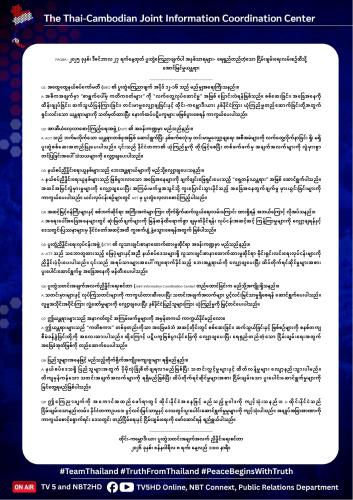
FAQ&A : สาระตามถ้อยแถลงร่วมฯ เมื่อ 27 ธันวาคม 2568
กลไกสู่ความสำเร็จบนเส้นทางสันติภาพที่ยั่งยืน
---------------------------------
Q1: ข้อ 12-16 ของถ้อยแถลงร่วม GBC มีความสำคัญอย่างไร
A: เป็นหัวใจของการเปลี่ยน “ข้อตกลงบนกระดาษ” ให้เป็น “การปฏิบัติจริง” โดยกำหนดกลไกชัดเจน
ในการตรวจสอบ ควบคุมสถานการณ์ สื่อสาร และลดระดับความตึงเครียด สร้างความเชื่อมั่นระหว่าง
ไทย - กัมพูชา เพื่อป้องกันการปะทะซ้ำ
Q2: บทบาทของผู้สังเกตการณ์อาเซียน (AOT) คืออะไร
A: AOT ทำหน้าที่เป็นกลไกกลางที่เป็นกลาง ตรวจสอบและรับรองว่าทั้งสองฝ่ายปฏิบัติตามมาตรการ
ลดความตึงเครียดจริง ช่วยเพิ่มความน่าเชื่อถือในสายตานานาชาติ และลดข้อครหาว่าฝ่ายใดฝ่ายหนึ่งบิดเบือนข้อเท็จจริง
Q3: หน่วยประสานงานชายแดนช่วยลดความเสี่ยงอย่างไร
A: หน่วยประสานงานชายแดนเป็น “ด่านหน้า” ในการจัดการเหตุการณ์เฉพาะหน้า แก้ไขปัญหา
ได้ทันที ลดความเข้าใจผิด และป้องกันการคำนวณผิดพลาดที่อาจนำไปสู่ความรุนแรง โดยมี AOT
ร่วมสังเกตการณ์
Q4: ทำไมต้องมีช่องทางการสื่อสารโดยตรงระดับรัฐมนตรีและผู้บัญชาการทหาร
A: เพื่อให้การตัดสินใจในสถานการณ์เร่งด่วนเป็นไปอย่างรวดเร็ว ไม่ติดขัดในขั้นตอน และไม่ปล่อยให้สถานการณ์ลุกลามจากระดับพื้นที่ไปสู่ระดับประเทศ
Q5: กองกำลังร่วมเฉพาะกิจ (JCTF) มีบทบาทด้านมนุษยธรรมอย่างไร
A: JCTF ทำหน้าที่ประสานและอำนวยความสะดวกการเก็บกู้ทุ่นระเบิด เพื่อมนุษยธรรมในพื้นที่ชายแดน ตามแผนที่ตกลงร่วมกัน ลดความเสี่ยงต่อพลเรือน และสร้างบรรยากาศความร่วมมือมากกว่าการเผชิญหน้า
Q6: การตั้งศูนย์ประสานข้อมูลข่าวสารร่วมช่วยอะไรได้บ้าง
A: ช่วยป้องกันและจัดการข่าวเท็จหรือข้อมูลบิดเบือน สร้างความโปร่งใสของข้อมูล ลดการปลุกปั่นทางสังคม และเสริมสร้างความไว้วางใจระหว่างประชาชนของทั้งสองประเทศ
Q7: กลไกเหล่านี้ช่วยป้องกันความรุนแรงในอนาคตได้จริงหรือไม่
A: กลไกดังกล่าวไม่ได้พึ่งพา “คำสัญญา” เพียงอย่างเดียว แต่มีการตรวจสอบ การสื่อสาร และการจัดการเหตุการณ์ในทุกระดับ จึงช่วยลดโอกาสการปะทะซ้ำ และสร้างรากฐานของสันติภาพที่ยั่งยืน
Q8: ประชาชนจะได้รับประโยชน์โดยตรงอย่างไร
A: ประชาชนในพื้นที่ชายแดนมีความปลอดภัยมากขึ้น ลดข่าวลือและความตื่นตระหนก ได้รับข้อมูลที่ถูกต้อง และเห็นความร่วมมือเชิงสันติแทนการเผชิญหน้า
Q9: ไทยยึดหลักใดในการดำเนินการตามถ้อยแถลงนี้
A: ไทยยึดหลักสันติวิธี กฎหมายระหว่างประเทศ ความโปร่งใส และความร่วมมือระดับภูมิภาค โดยมุ่งรักษาอธิปไตยควบคู่กับเสถียรภาพและสันติภาพในภูมิภาค
---------------------------------
ศูนย์ประสานข้อมูลข่าวสารร่วม ไทย - กัมพูชา
8 มกราคม 2569 เวลา 13.00 น.
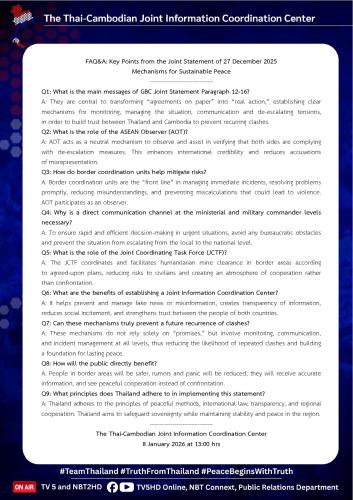
FAQ&A: Key Points from the Joint Statement of 27 December 2025
Mechanisms for Sustainable Peace
---------------------------------
Q1: What is the main messages of GBC Joint Statement Paragraph 12-16?
A: They are central to transforming “agreements on paper” into “real action,” establishing clear mechanisms for monitoring, managing the situation, communication and de-escalating tensions,
in order to build trust between Thailand and Cambodia to prevent recurring clashes.
Q2: What is the role of the ASEAN Observer (AOT)?
A: AOT acts as a neutral mechanism to observe and assist in verifying that both sides are complying with de-escalation measures. This enhances international credibility and reduces accusations
of misrepresentation.
Q3: How do border coordination units help mitigate risks?
A: Border coordination units are the “front line” in managing immediate incidents, resolving problems promptly, reducing misunderstandings, and preventing miscalculations that could lead to violence.
AOT participates as an observer.
Q4: Why is a direct communication channel at the ministerial and military commander levels necessary?
A: To ensure rapid and efficient decision-making in urgent situations, avoid any bureaucratic obstacles and prevent the situation from escalating from the local to the national level.
Q5: What is the role of the Joint Coordinating Task Force (JCTF)?
A: The JCTF coordinates and facilitates humanitarian mine clearance in border areas according
to agreed-upon plans, reducing risks to civilians and creating an atmosphere of cooperation rather
than confrontation.
Q6: What are the benefits of establishing a Joint Information Coordination Center?
A: It helps prevent and manage fake news or misinformation, creates transparency of information, reduces social incitement, and strengthens trust between the people of both countries.
Q7: Can these mechanisms truly prevent a future recurrence of clashes?
A: These mechanisms do not rely solely on “promises,” but involve monitoring, communication,
and incident management at all levels, thus reducing the likelihood of repeated clashes and building
a foundation for lasting peace.
Q8: How will the public directly benefit?
A: People in border areas will be safer, rumors and panic will be reduced, they will receive accurate information, and see peaceful cooperation instead of confrontation.
Q9: What principles does Thailand adhere to in implementing this statement?
A: Thailand adheres to the principles of peaceful methods, international law, transparency, and regional cooperation. Thailand aims to safeguard sovereignty while maintaining stability and peace in the region.
---------------------------------
The Thai-Cambodian Joint Information Coordination Center
8 January 2026 at 13:00 hrs
 รูปภาพ









เลขที่ 9 ซอยพระราม 6 ซอย 30
ถนนพระราม 6 แขวงพญาไท เขตพญาไท
กรุงเทพมหานคร 10400
โทรศัพท์ 0 2618 2323
ส่งหนังสือราชการ : saraban@prd.go.th
ฝากข่าวประชาสัมพันธ์หน้าเว็บไซต์ : webmaster@prd.go.th
สงวนลิขสิทธิ์ พ.ศ. 2563 กรมประชาสัมพันธ์