


English version below…
จากกรณีที่วันนี้ (29 พฤศจิกายน 2568) ศูนย์ปฏิบัติการกองทัพภาคที่ 1 รายงานว่า พบชายชาวจีนลักลอบข้ามแดนเข้ามาฝั่งไทยบริเวณบ้านหนองจาน ตำบลโนนหมากมุ่น อำเภอโคกสูง จังหวัดสระแก้ว และได้เหยียบกับทุ่นระเบิดจนได้รับบาดเจ็บนั้น พลตรี วินธัย สุวารี โฆษกกองทัพบก เปิดเผยว่า
“ในส่วนของผู้บาดเจ็บ เจ้าหน้าที่ได้นำตัวส่งโรงพยาบาลเรียบร้อยแล้ว พร้อมประสานตำรวจตรวจคนเข้าเมืองจังหวัดสระแก้วเพื่อดำเนินการสอบสวนตามขั้นตอน เนื่องจากเป็นการลักลอบเข้าเมืองโดยผิดกฎหมาย โดยในเบื้องต้นมีข้อสันนิษฐานว่าอาจเกี่ยวข้องกับขบวนการ Cyber Scam ซึ่งที่ผ่านมาพบการหลบหนีเข้ามายังฝั่งไทยอย่างต่อเนื่อง”
สำหรับรายละเอียดพื้นที่เกิดเหตุ โฆษกกองทัพบกชี้แจงว่า จุดดังกล่าวตั้งอยู่ในแนวพื้นที่ปฏิบัติการของฝ่ายไทย ห่างจากถนนศรีเพ็ญประมาณ 90 เมตร และเป็นพื้นที่ปนเปื้อนทุ่นระเบิดที่ฝ่ายไทยกำลังดำเนินการเก็บกู้ตามแผน โดยที่ผ่านมาเคยตรวจพบทุ่นระเบิดจำนวนมากในพื้นที่ดังกล่าว หากพิจารณาจากสภาพพื้นที่ จะเห็นได้ว่าฝ่ายกัมพูชามีการวางทุ่นระเบิดตลอดแนวชายแดนในลักษณะขัดขวางการปฏิบัติงานของเจ้าหน้าที่ไทยและกระทบต่อประชาชน ไม่เฉพาะจุดนี้เท่านั้น แต่ยังพบได้ทั่วไปตลอดแนวชายแดนไทย–กัมพูชา ทั้งนี้ ทุ่นระเบิดที่พบในเหตุการณ์ล่าสุดยังอยู่ระหว่างการพิสูจน์ว่าเป็นทุ่นระเบิดเก่าหรือใหม่ แต่ผลกระทบที่เกิดขึ้นคือประชาชนไทยไม่สามารถเข้าไปใช้ประโยชน์ในพื้นที่ซึ่งควรเป็นพื้นที่ปลอดภัยได้
พลตรี วินธัย กล่าวต่อว่า ฝ่ายกัมพูชามีการใช้ทุ่นระเบิดประกอบการปฏิบัติทางยุทธวิธีมาตั้งแต่ในอดีต และในปัจจุบันก็ยังใช้อยู่ตามแบบทางยุทธวิธีดั้งเดิม ปัจจุบันจึงพบหลักฐานการใช้ทุ่นระเบิดแบบ PMN-2 ซึ่งเป็นชนิดใหม่จำนวนมาก เพื่อใช้เป็นอาวุธลอบทำร้ายและขัดขวางฝ่ายตรงข้าม
ที่สำคัญคือกัมพูชาเป็นภาคีอนุสัญญาออตตาวา และได้รับเงินสนับสนุนจำนวนมากจากนานาชาติเพื่อใช้ในการเก็บกู้ทุ่นระเบิด แต่กลับไม่แสดงความร่วมมือในการเก็บกู้ตามแนวชายแดนร่วมกับฝ่ายไทย แม้ไทยจะยื่นข้อเสนอผ่านเวทีการประชุมทวิภาคีหลายครั้งก็ตาม นอกจากนี้ยังมีรายงานว่าฝ่ายกัมพูชาเข้าไปขัดขวางการปฏิบัติงานเก็บกู้ของฝ่ายไทยในหลายพื้นที่อีกด้วย
เหตุการณ์ครั้งนี้สะท้อนให้เห็นถึงความโหดร้ายของทุ่นระเบิดที่ส่งผลกระทบต่อทุกฝ่าย ไม่เลือกว่าจะเป็นทหารหรือพลเรือนของประเทศใด ขณะเดียวกันยังชี้ให้เห็นถึงความไร้ความรับผิดชอบของกัมพูชาในการร่วมกันแก้ไขปัญหา อีกทั้งหลักฐานจำนวนมากบ่งชี้ถึงการใช้ทุ่นระเบิดใหม่อย่างต่อเนื่อง เชื่อว่าข้อมูลข้อเท็จจริงที่ฝ่ายไทยได้จัดทำและส่งให้องค์กรระหว่างประเทศจะถูกนำไปใช้ในการพิจารณา และทำให้กัมพูชาต้องรับผลจากการกระทำอันรุนแรงที่เกิดขึ้นครั้งนี้
Royal Thai Army Says Chinese Man’s Landmine Injury Highlights Border Mine Problem; Cambodia Still Planting, Fails to Cooperate, Public Safety at Risk
On November 29, 2025, the 1st Army Area Operations Center reported that a Chinese man had illegally crossed the border into Thailand near Ban Nong Jan, Non Mak Mun Subdistrict, Khok Sung District, Sa Kaeo Province, and stepped on a landmine, sustaining injuries. Major General Winthai Suvaree, Army Spokesperson, stated:
“The injured person has already been taken to the hospital, and immigration police in Sa Kaeo have been contacted to conduct an investigation according to procedure, since this was an illegal border crossing. Preliminary assumptions suggest possible links to a cyber scam network, as there have been continuous cases of people fleeing into Thailand.”
Regarding the details of the incident site, the Army Spokesperson explained that the location lies within Thailand’s operational area, about 90 meters from Sri Phen Road, and is contaminated with landmines that Thai authorities are in the process of clearing according to plan. Many landmines have previously been found in this area. Based on the terrain, it is evident that Cambodia has laid mines along the border to obstruct Thai officials and affect civilians. This is not limited to this spot but occurs widely along the Thai–Cambodian border. The landmine found in this latest incident is still being examined to determine whether it is old or newly planted, but the impact is that Thai civilians cannot safely use land that should be secure.
Major General Winthai further stated that Cambodia has historically used landmines as part of its military tactics, and continues to employ them in traditional ways. Evidence now shows widespread use of PMN-2 mines, a newer type, deployed as weapons to injure and obstruct opponents.
Importantly, Cambodia is a state party to the Ottawa Convention and has received substantial international funding for mine clearance, yet has not cooperated with Thailand in clearing mines along the shared border, despite Thailand’s repeated proposals in bilateral meetings. Reports also indicate that Cambodian authorities have interfered with Thai mine clearance operations in several areas.
This incident highlights the cruelty of landmines, which harm all sides regardless of nationality, whether soldiers or civilians. At the same time, it underscores Cambodia’s irresponsibility in addressing the problem. The abundance of evidence points to the continued use of new mines. It is believed that the factual information compiled by Thailand and submitted to international organizations will be considered, leading Cambodia to face consequences for the severe actions that occurred in this case.
 รูปภาพ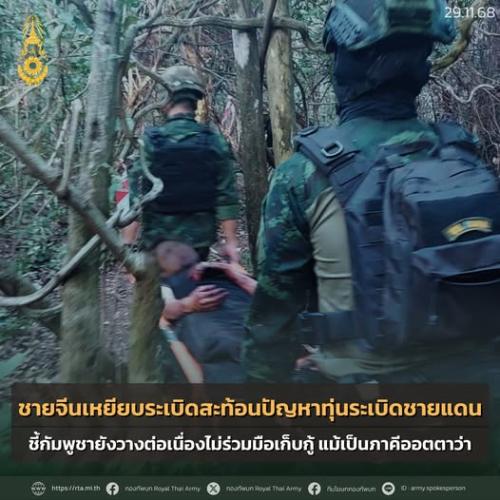




เลขที่ 9 ซอยพระราม 6 ซอย 30
ถนนพระราม 6 แขวงพญาไท เขตพญาไท
กรุงเทพมหานคร 10400
โทรศัพท์ 0 2618 2323
ส่งหนังสือราชการ : saraban@prd.go.th
ฝากข่าวประชาสัมพันธ์หน้าเว็บไซต์ : webmaster@prd.go.th
สงวนลิขสิทธิ์ พ.ศ. 2563 กรมประชาสัมพันธ์